
You Already Earned the Revenue. Why Are You Still Waiting?
Winning the job is only half the battle. How quickly you collect payment directly affects cash flow, working capital, and your ability to invest in growth.
It’s Friday afternoon, and an HVAC company has wrapped up another busy week. Twenty-seven service calls have been completed. Customers are happy, technicians have moved on to the next job, and invoices have been sent.
On paper, it looks like a successful week. But payroll is due, service vans need maintenance, inventory must be replenished, and the marketing agency has sent its monthly invoice. Much of the revenue needed to cover those expenses is still sitting in accounts receivable.

This isn’t unique to home service businesses. According to Creditsafe, 86% of businesses regularly experience late customer payments, and more than 80% follow up with customers multiple times before receiving payment.¹
This is the reality for many home service businesses. More organizations are modernizing their payment workflows to improve cash flow and reduce operational friction, recognizing that getting paid faster starts with creating a better payment experience.
Every day between completing the work and collecting payment represents earned revenue that can’t yet be used to operate or grow the business. The longer that gap becomes, the more expensive it gets.
Revenue Doesn’t Grow Businesses. Cash Flow Does.
Revenue measures how much business you’ve won. Cash flow determines what you’re able to do with it.
Hiring another technician, purchasing equipment, expanding into a new service area, investing in marketing, or replacing aging vehicles all require available cash—not outstanding invoices. Businesses looking to improve cash flow often start by rethinking how payments fit into the overall service workflow instead of treating them as a separate back-office process.
A company that collects payment within a few days of completing a job has far more flexibility than one generating the same revenue but waiting three or four weeks to get paid. The difference isn’t sales performance—it’s payment velocity.
Business leaders increasingly recognize working capital as a key indicator of operational health. Deloitte notes that effective working capital management improves liquidity, operational resilience, and an organization’s ability to invest in strategic initiatives.2
Waiting to Get Paid Is More Expensive Than Most Businesses Realize
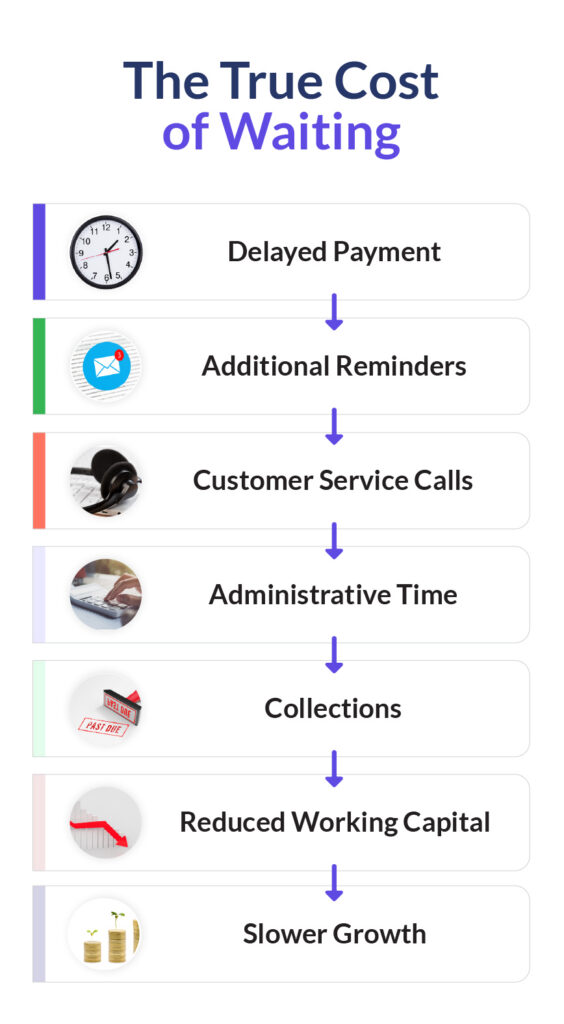
When people think about delayed payments, they usually think about slower cash flow. What they don’t see are the hidden operational costs that accumulate while waiting.
Every outstanding invoice creates additional work. Office staff answer payment questions, send reminders, reconcile accounts, review aging reports, and follow up with customers who simply haven’t gotten around to paying. None of those activities create value for customers—they simply consume time and resources.
Many organizations reduce this burden by modernizing invoice presentment, making it easier for customers to receive, review, and pay invoices while the service is still top of mind.
Research from Creditsafe suggests this is common across industries. Most businesses report following up on overdue invoices multiple times before payment is finally received.¹ The cost rarely appears as a single line item. Instead, it’s spread across customer service, accounting, operations, and management.
Over time, it becomes one of the most expensive administrative processes in the business.
Small Delays Become Big Numbers
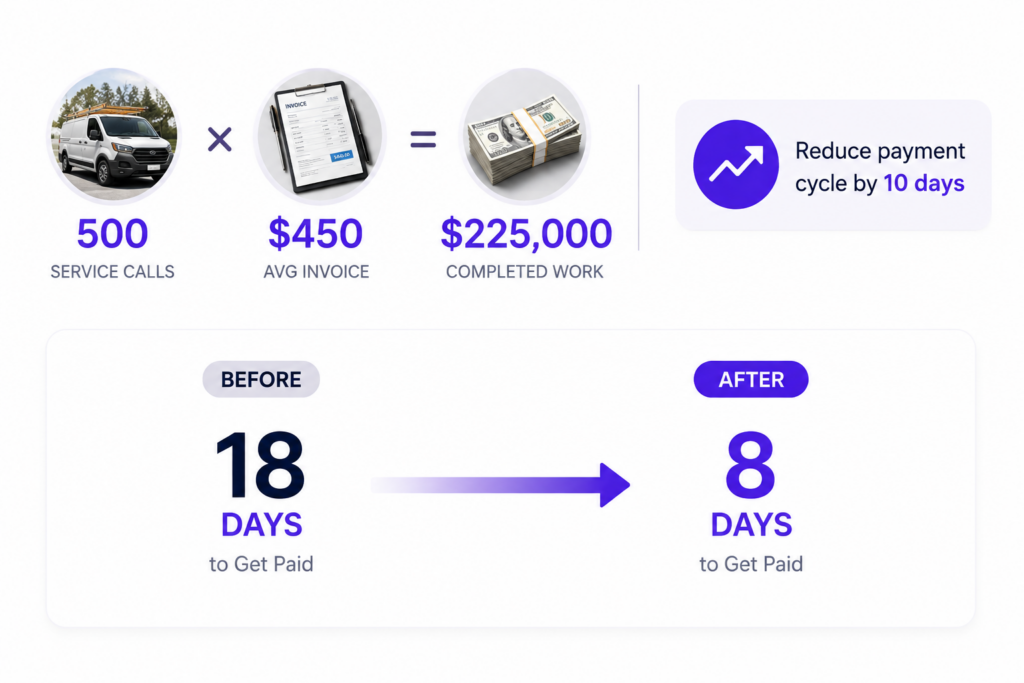
Imagine a plumbing company that completes 500 service calls every month with an average invoice of $450.
That’s $225,000 in completed work.
If payments take an average of 18 days to arrive, nearly a quarter-million dollars in earned revenue remains tied up in receivables at any given time.
Now imagine reducing that payment cycle by just 10 days.
Without selling another job, the business gains earlier access to cash it has already earned.
That additional liquidity can fund payroll, inventory, equipment purchases, and marketing initiatives without borrowing money or increasing sales.
Sometimes the greatest opportunity isn’t booking more work. It’s reducing the time between completing the work and collecting payment.
What Could Faster Payments Mean for Your Business?
Reducing your average payment cycle doesn’t just improve a KPI—it puts cash back into your business sooner.
Instead of waiting on outstanding invoices, that cash could be used to:
- Hire additional technicians
- Purchase inventory or equipment
- Invest in marketing and growth
- Reduce reliance on financing
- Strengthen overall cash flow
Customers Aren’t Choosing to Pay Late
It’s easy to assume unpaid invoices reflect customers who don’t want to pay. More often, they reflect customers who got distracted.
A technician finishes a repair late in the afternoon. The homeowner thanks them, signs the work order, and heads inside to finish dinner before leaving for evening activities. The invoice arrives later that evening. The customer intends to pay.
But tomorrow becomes next week, the email gets buried, and what should have been a two-minute transaction becomes a two-week collection cycle.
Not because the customer refused to pay. Because the moment passed. The easiest time to collect payment is when the value of the service is still fresh in the customer’s mind.
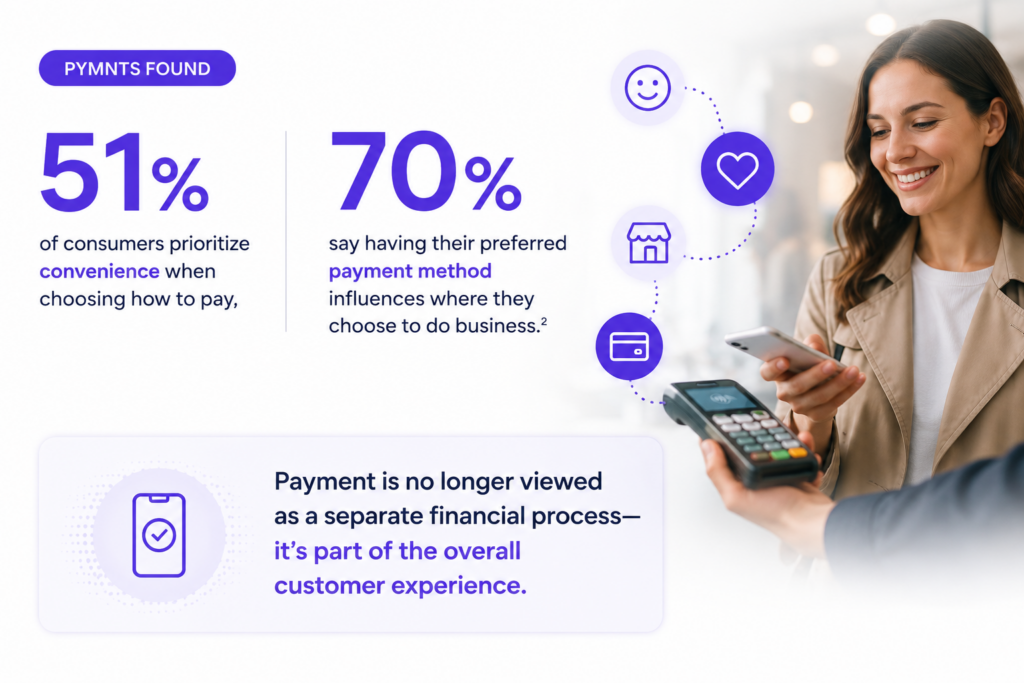
Customer expectations have evolved as well. PYMNTS Intelligence found that 51% of consumers prioritize convenience when choosing how to pay, while 70% say having their preferred payment method influences where they choose to do business.²
Convenience is no longer a differentiator. It’s the baseline customers expect.
The Best Businesses Optimize for Payment Velocity
Leading home service businesses are measuring payments differently.
Rather than viewing collections as a back-office responsibility, they view payment speed as an operational metric—one that influences cash flow, staffing, customer satisfaction, and long-term growth. That shift changes decision-making.
Instead of asking, “How do we collect overdue invoices?” they ask, “How do we make it easier for customers to pay while the value of the service is still top of mind?”
The answer isn’t sending invoices faster. It’s removing friction from every step between service completion and payment.
The most successful businesses create opportunities to pay immediately after service completion, support customers’ preferred payment methods, automate follow-up, and reduce manual collections. These approaches are becoming standard across organizations modernizing their field service payment processes.
The result isn’t just faster payments.
It’s healthier cash flow, less administrative work, fewer payment-related customer service calls, and stronger customer relationships.
Metrics That Matter
Revenue tells you how much business you’re generating. Payment metrics show how efficiently you’re turning that revenue into cash.
Leading organizations increasingly monitor:
- Average days to payment
- Percentage of invoices paid the same day
- Days Sales Outstanding (DSO)
- Payment-related customer service calls
- Average reminder count
- Technician payment capture rate
- Percentage of customers using digital payment methods
Together, these metrics provide a more complete picture of payment performance than accounts receivable alone.
Customer Spotlight

Across industries, organizations reducing payment friction consistently see the same outcome: faster cash flow, less administrative work, and a better customer experience.
Cash Flow Is a Competitive Advantage
Every home service business works hard to win the next job.
The businesses creating the greatest long-term advantage focus just as much on what happens after the work is complete.
Completing the job generates revenue.
Getting paid quickly creates the cash flow that fuels everything that comes next.
That’s why leading organizations no longer view payments as a back-office accounting function. They view payments as a strategic capability that improves working capital, strengthens customer relationships, and gives the business greater flexibility to invest in growth.
Let’s Talk About Your Payment Experience
Every home service business has opportunities to accelerate cash flow, simplify collections, and reduce the operational burden of getting paid.
If you’re looking for ways to shorten payment cycles while creating a better experience for both customers and employees, we’d love to help.
Explore how Authvia helps field service organizations modernize payment experiences, or contact our team to discuss your current payment workflow.
Sources
- Creditsafe. Late Payments and Cash Flow. https://www.creditsafe.com/us/en/resources/blog/business-credit/late-payments-cash-flow.html
- Deloitte. Working Capital Management. https://www.deloitte.com/us/en/services/consulting/articles/working-capital-management-report.html
- PYMNTS Intelligence. Consumer Insights. https://www.pymnts.com/consumer-insights/2025/51-percent-of-shoppers-put-convenience-first-when-choosing-payments